
By James Beck
Anglican faith communities across Otago and Southland are taking clear, collective action to care for the earth. At the 2026 Diocesan Synod, representatives passed Motion 12, affirming that caring for creation is an essential expression of Christian discipleship, justice, and faithful stewardship. The resolution formally challenges parishes, ministry units, and diocesan organisations to reduce their carbon footprints and explore partnering with Eco Church Aotearoa.
The motion frames climate action not just as environmental responsibility, but as neighbour-love and justice for Pacific communities most vulnerable to climate impacts. It also emphasises kaitiakitanga and our commitment to Te Tiriti o Waitangi by encouraging churches to build relationships with local iwi, hapū, and community groups.
In a pastoral letter following Synod, Bishop Anne van Gend acknowledged the varied capacity across parishes, reassuring faith communities that this is about manageable steps:
"This is not about adding another burden to already stretched communities, but about identifying achievable steps that reflect our Christian calling."
Bishop Anne highlighted practical possibilities, including improving building insulation and heating, cutting waste, rethinking church grounds to support local biodiversity, and sharing stories across Otago and Southland to encourage one another.
I had the privilege of addressing the Synod, encouraging the diocese to take seriously its calling to nurture and protect God's world.
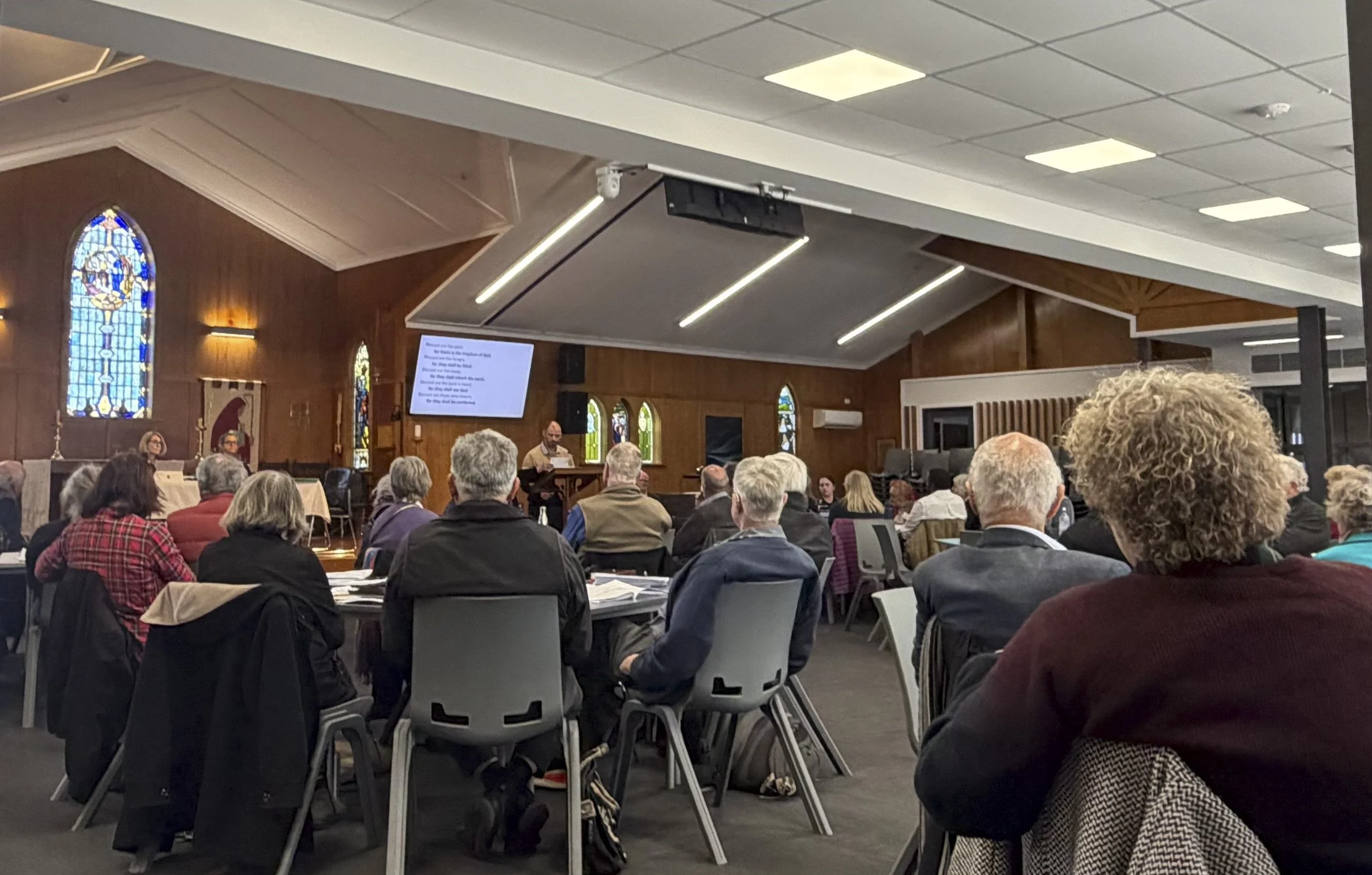
Synod 2026 at St Hilda’s Collegiate
In a world where climate anxiety can feel heavy, local, grounded church action offers a visible sign of Christian hope.
Is your church exploring its next environmental step? Check out the resources at ecochurch.org.nz to connect with practical tools and join the growing network across Aotearoa.
