
Practical and creative community action at St George's Epsom
At St George’s Epsom, Eco Church has become a way for people of all ages to live out their faith through care for creation and care for others. Over the past year, two very different projects have shown how powerful small, practical actions can be when they are rooted in community, creativity, and purpose.
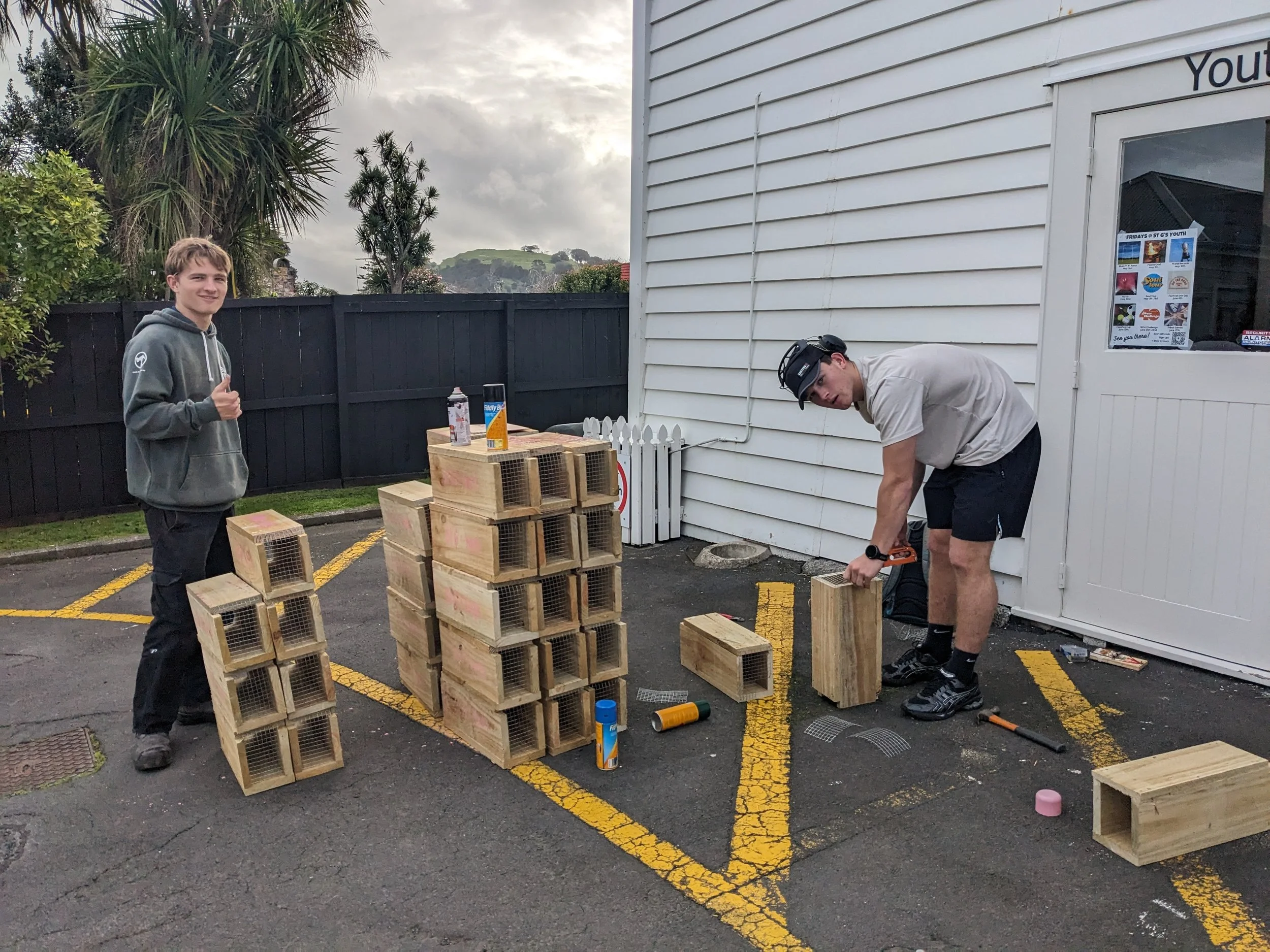
Youth taking action for nature
As part of a World Vision project, Evan and Callum Walters have been leading hands-on conservation work alongside other youth. With help from youth at various times, they built 40 rat traps to support wider predator-control efforts in Aotearoa.
These traps will join 760 traps built by students from Auckland Grammar School and will be used by the Leigh Harbour Trust as part of an ambitious project to create a predator-free corridor from Tāwharanui to the Kaipara Harbour. Together, these efforts will help protect native wildlife and restore ecological connections across the landscape.
This project is a great example of young people putting faith into action—learning practical skills, contributing to large-scale conservation, and discovering that their efforts matter.
When there’s no space to grow… grow anyway
At the same time, a group at St George’s was keen to promote Eco Church through food growing and community wellbeing. The challenge? There was no suitable space on the church grounds for a traditional community garden—no area with enough sun or space for vegetables.
Rather than giving up, one of the team, David Blaker, suggested a different approach. Instead of growing food on church land, why not encourage people who enjoy gardening to grow vegetables at home and share their surplus with those in need?
This idea became a new model: individuals growing food in their own gardens and donating excess produce. It has already had a meaningful impact. A significant quantity of home-grown vegetables has been given to Auckland City Mission and to Everybody Eats in Onehunga—a pay-what-you-can restaurant supporting families experiencing food insecurity.
David supports the group by sending regular newsletters, supplying vegetable plants, sharing tips for increasing yields, and even providing a particularly effective liquid fertiliser. His May newsletter captured both the abundance and generosity of the project:
“This is the season of mellow fruitfulness—and time to harvest your summer vegetables if you haven't yet done so. Over the last few days I’ve dug out all the kūmara grown in my little 1m by 3m raised bed. About 5 kg. Most was given today to the Onehunga Mall Everybody Eats restaurant.”
The newsletter also encouraged winter planting where possible and highlighted the importance of regenerating soil in preparation for the next growing season—reminding participants that caring for the earth is as important as harvesting from it.
A model worth sharing
These two stories—from rat trapping to home-grown vegetables—show that Eco Church doesn’t look the same everywhere. Whether it’s youth building traps for predator-free corridors or gardeners sharing surplus kai with those in need, what matters is responding creatively to local context.
As Janet Frater reflects, this approach may be helpful for other churches with limited space:
“It may be that other churches with limited garden space could use a similar model.”
These initiatives remind us that faith-based environmental action can be practical, joyful, and deeply connected to community wellbeing.