
Kāpiti Anglicans Lenten Pilgrimage
Story contributed by Irene Parminter.
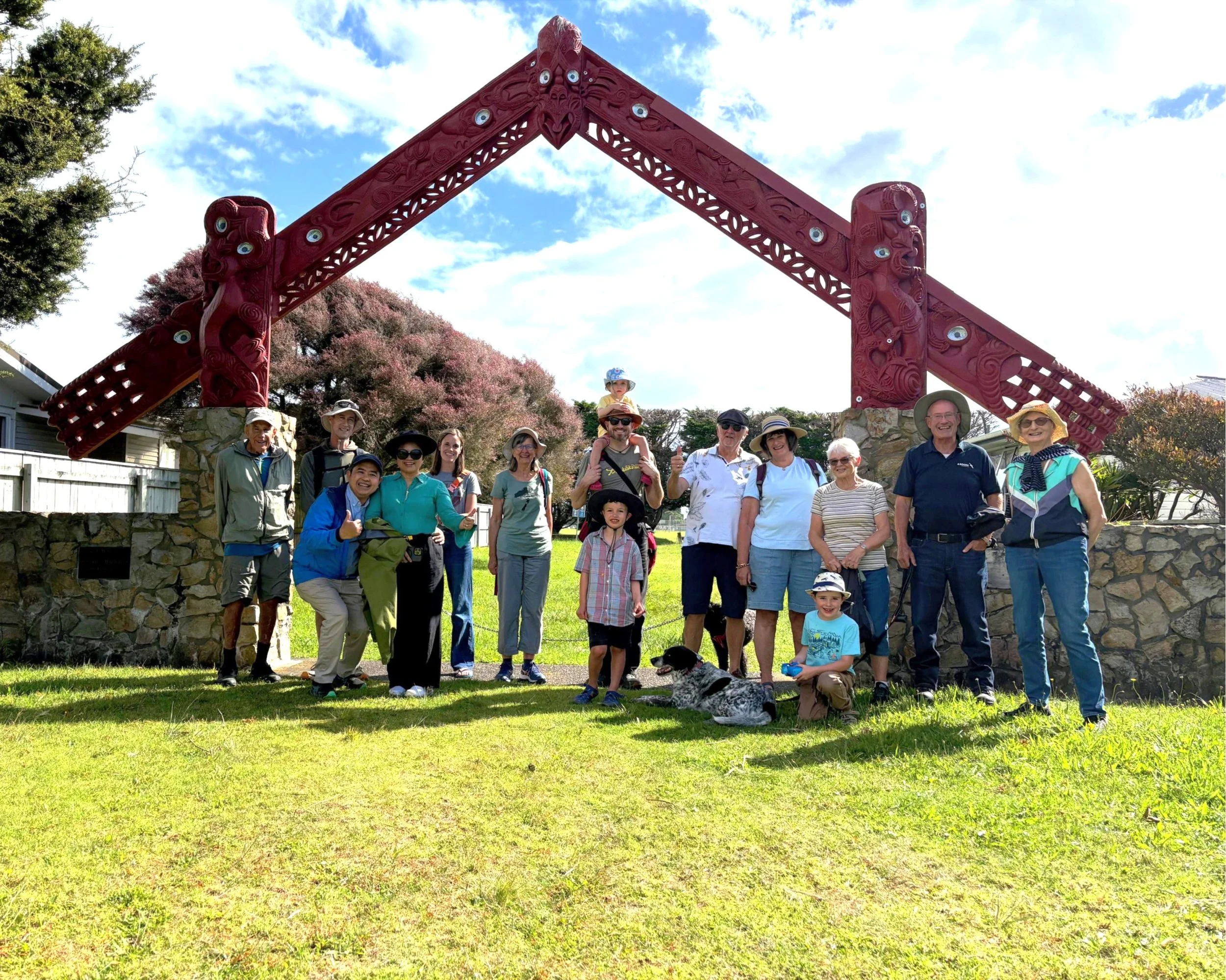
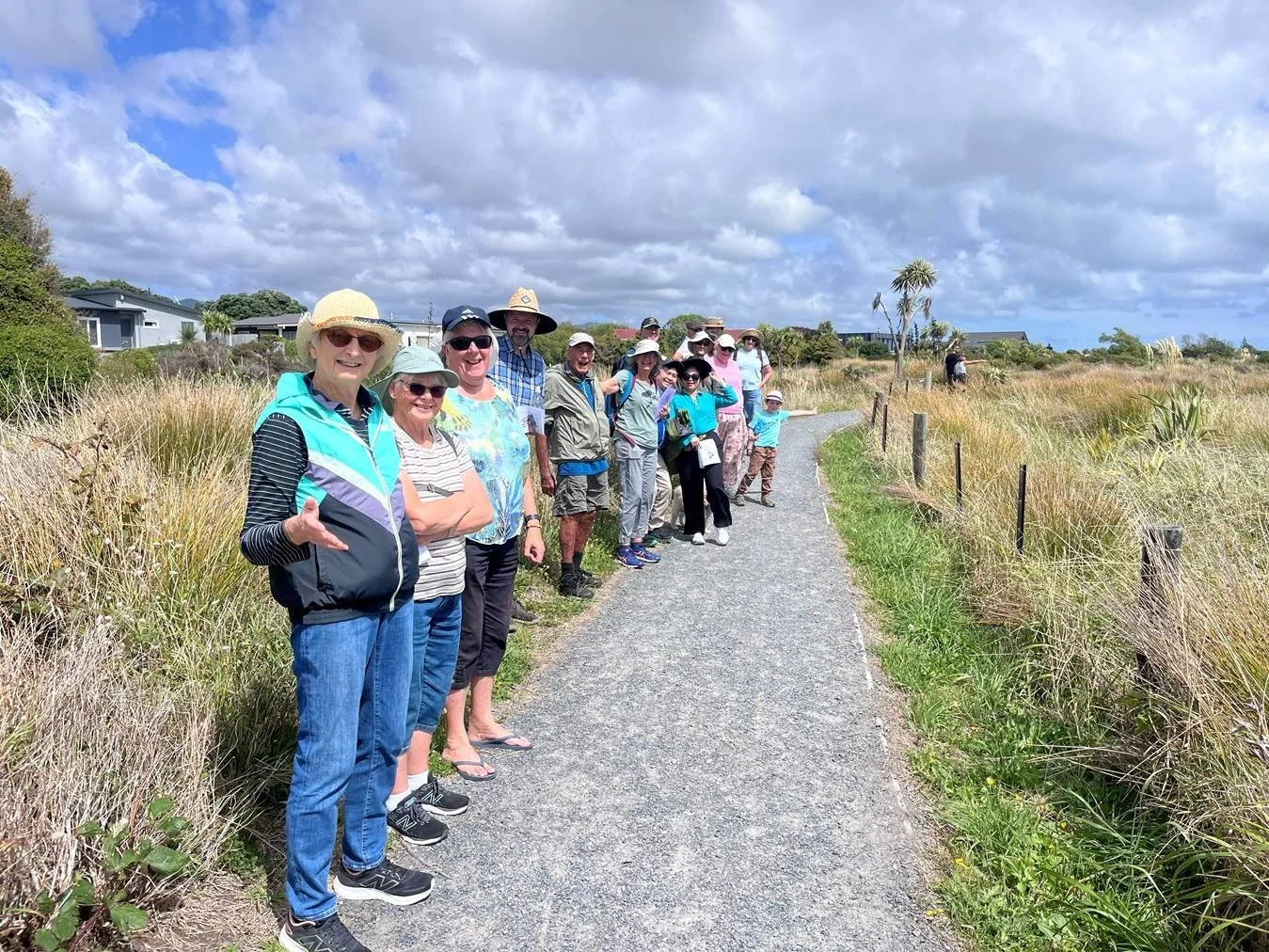
Kāpiti is a beautiful place with an interesting history. So, on March 1 2026, twenty Kāpiti Anglicans (plus three dogs on leads) undertook a Lenten pilgrim walk from the site of one of first churches to be built in Kāpiti, at Kenakena, through the Waikanae Estuary Scientific Reserve to the Otaihanga Domain. We returned via a loop to look at the former Ferry Inn, the oldest house in Kāpiti.
The walk helped us become more aware of the history of the place we live in, and to reflect on the faith of the Te Āti Awa people, who laid the spiritual foundations for the Church in Kāpiti. When the missionary Octavius Hadfield arrived in Kapiti late in 1839, the Gospel had already been brought to the Te Āti Awa people living in Kapiti by Ripahau, who had receiving teaching at the Williams’ Mission Station in the Bay of Islands. The Te Āti Awa people received the Gospel gladly. In 1839, they already had a small chapel, but at the encouragement of Octavius, built a larger church near Kenakena Pa (close to the north end of Paraparaumu Beach), completed in 1843. However, the Pā and church were later abandoned to the shifting sand dunes as the Te Āti Awa people moved away, and the church was engulfed within 10 years of its construction. The remnants were only rediscovered in 1961. The site is now marked with a carved archway, with wood from the original church set into the base.
In the Reserve, we enjoyed the mosaic of freshwater lakelets, saltwater lagoons and marshes, tidal sand flats and sandy beach, noticing the many birds feeding and resting where the estuary reaches the sea.
We were blessed with a beautiful day for the walk, and good fellowship along the way.